Harborcreek is two different jobs on the same road
Harborcreek splits into two very different kinds of property, and they fail in different ways. North of Route 5 you have the lakefront and near-lake homes — high water table, wind-driven rain off the lake, and some of the heaviest snow load in the township. South of the ridge you have larger lots, many on private well and septic, where a water loss and a wastewater problem can be the same event.
The private septic piece is the one homeowners are most often unprepared for. A failed or surcharged system backing into a basement is a Category 3 loss — porous materials come out, containment goes up, and the cleanup is a biohazard job rather than a drying job. It is also frequently uncovered, because sewer and drain backup requires a specific policy endorsement that most people find out about the day they need it.
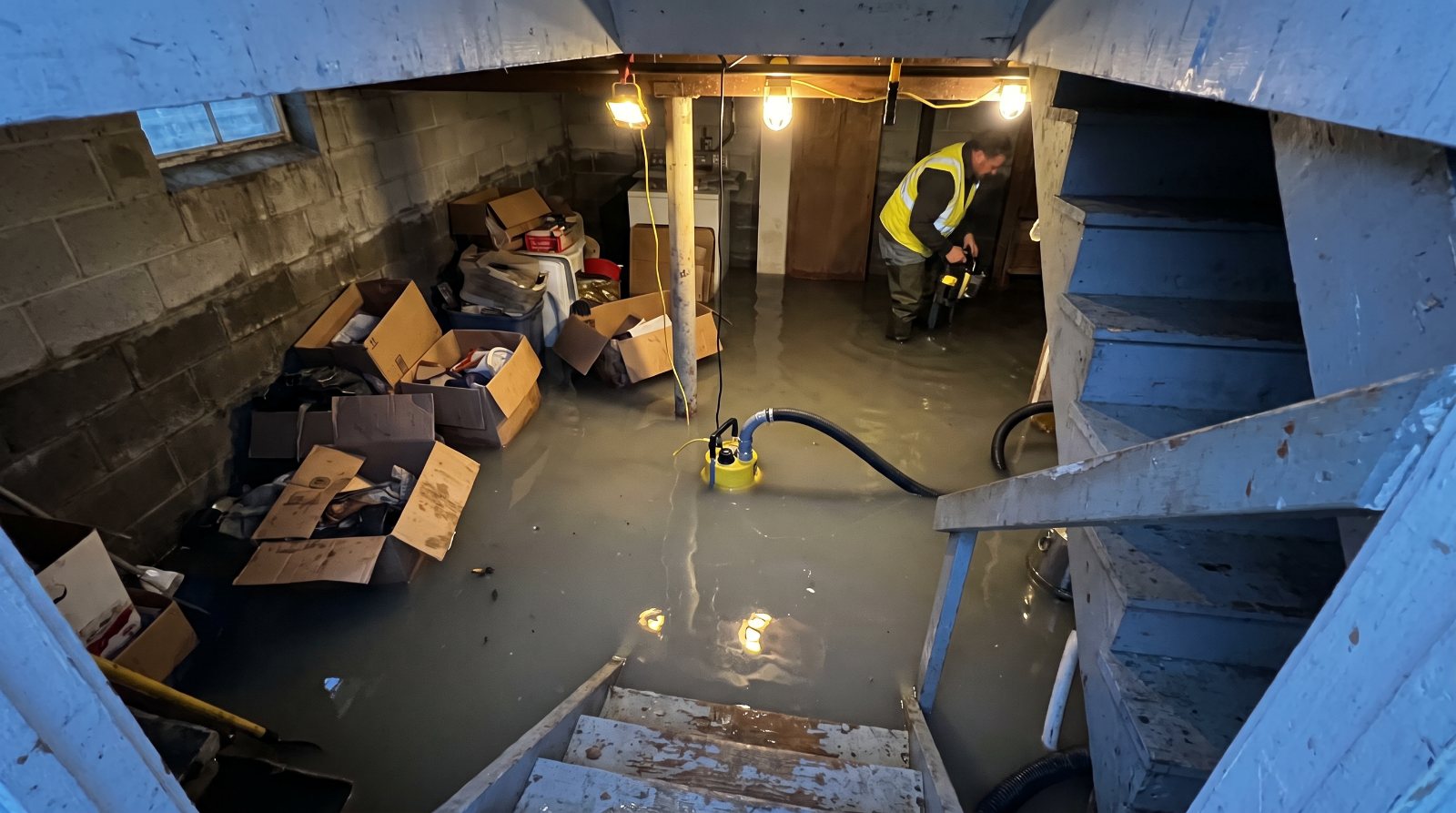
The other frequent call is the finished lower level. A lot of the township built out in the 1970s and 80s with a walkout or partially finished basement, and those rooms are almost entirely porous material — carpet, pad, drywall, drop ceiling. Caught inside the first hours it is often a drying job; a day later it is demolition and rebuild.
From our Erie staging point, Harborcreek runs about 50 minutes, and less for the western end of the township.
Shut the water main off if it's a supply leak. Kill power at the breaker to the affected area if water is near outlets — never wade into standing water to reach the panel. Lift what you can. Photograph everything before it's touched.
Harborcreek areas we serve
Harborcreek · Moorheadville · Shorewood · Nickel Plate Road corridor · Route 5 lakefront · Buffalo Road corridor · Clark Road · Depot Road · Iroquois Avenue area · Penn State Behrend area
All services in Harborcreek
Lakeshore to farmland in one township
Harborcreek covers a lot of ground and the losses change as you move south from the lake. Along Route 5 and the bluff, the concerns are lake-driven: wind-driven rain, high summer humidity holding moisture in basements and crawlspaces, and older cottages converted to year-round housing without the insulation or vapor control that conversion required.
Through the middle of the township, the housing is conventional suburban and the failures are conventional too — water heaters, supply lines, appliance hoses, and sump pumps that were sized for a lighter rain than the one that arrives.
South toward the farmland and the interstate, properties spread out and go on well and septic. A septic surcharge into a basement is a Category 3 loss from the first minute, and it is handled with containment and removal, not with fans and hope.
Wineries, greenhouses, and agricultural outbuildings across the township are their own category. Losses in unoccupied structures run undetected for days, and the equipment and inventory inside are often worth more than the building.
When the power goes out on a well system there is no water at all, which complicates cleanup considerably. We bring our own water and generator capacity to rural calls as a matter of course rather than as an extra.
What fails out here
Septic surcharge & backup
Private systems that fail or surcharge in heavy rain. Category 3 water, containment required, and usually not covered without a backup endorsement.
High water table seepage
Near-lake properties where the table rises fast during the thaw and pushes water through the floor slab rather than the walls.
Wind-driven rain & snow
Off-lake weather forces water past flashing and around window frames on the exposed north elevation.
Finished lower levels
Carpet, pad and drywall in a walkout basement. Every hour of delay moves this from drying to demolition.
Harborcreek questions
How fast can you reach Harborcreek?
About 50 minutes typically, sometimes less at the western end of the township. Our trucks stage in Erie, so Harborcreek is well inside our primary response zone at any hour.
My septic backed up into the basement. What happens now?
Stay out of the area. That is Category 3 water — it carries bacteria and viruses, and it soaks into carpet, pad, drywall and insulation, which have to be removed rather than disinfected in place. We contain the area, remove affected material, decontaminate, dry, and then rebuild. Do not mop it, because that spreads contamination into clean space.
We are on a well. Does that affect the drying?
It affects sequencing. If the loss came from or contaminated the well side, that gets addressed and tested before we finish, and we will tell you when a water test is warranted. Structural drying itself is the same standard either way.
Is lakefront water damage treated differently?
Somewhat. Near-lake properties have a persistently higher moisture baseline, so we set the drying target against the actual local conditions rather than a generic number, and we check the slab and lower walls more aggressively than we would inland.