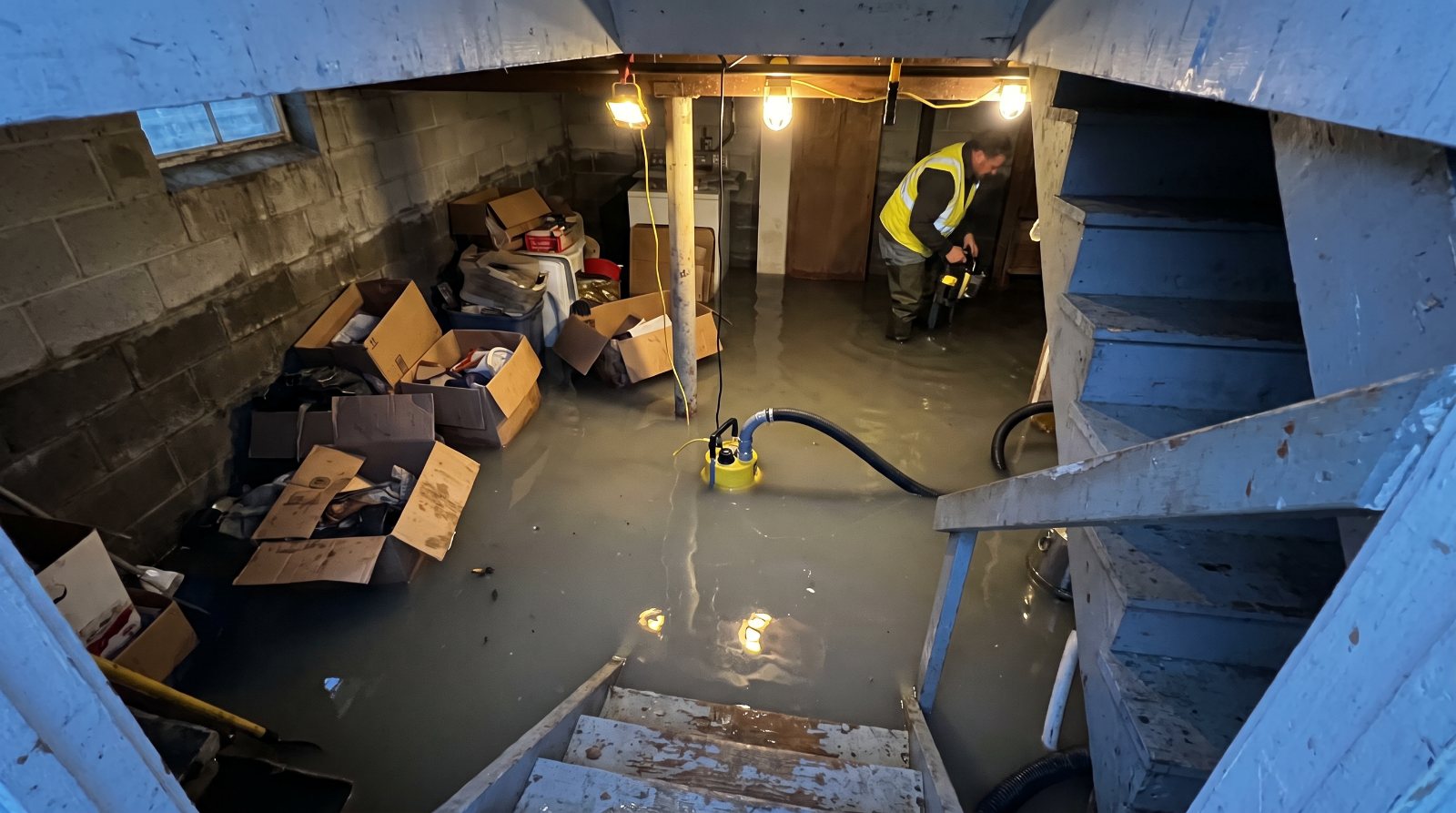
A rental town changes what goes wrong
Edinboro has a housing profile that is unusual for the county: a large share of it is rental, much of it student rental, and a meaningful amount is owned by someone who does not live in it. That single fact changes the restoration picture more than the age of the buildings does.
Losses in absentee-owned and seasonally occupied property get discovered late. A supply line that splits in a rental over winter break, or in a lake property between visits, runs until somebody happens to walk in. What would have been a drying job at hour two becomes mold remediation plus demolition at day five. The other frequent call is the multi-unit cascade: one failed line on an upper floor puts water through two or three units below it, and now there are several tenants, one owner, and an insurance carrier all needing different things.
Edinboro Lake adds the water-table dimension. Properties near the lake sit with a persistently higher moisture baseline, so basements and crawl spaces there need a drying target set against actual local conditions rather than a generic number.
We work directly with landlords and property managers here, including tenant notices and access scheduling, so your phone is not the one ringing all week. Edinboro runs about 60 minutes from our Erie staging point.
Shut the water main off if it's a supply leak. Kill power at the breaker to the affected area if water is near outlets — never wade into standing water to reach the panel. Lift what you can. Photograph everything before it's touched.
Edinboro areas we serve
Edinboro Borough · Washington Township · Edinboro Lake · PennWest Edinboro campus area · Route 6N corridor · Route 99 corridor · Meadville Street · Erie Street · Darrow Road · Culbertson Hill
All services in Edinboro
A borough, a university, and a lake
Edinboro has three distinct property types and each fails differently. The borough housing is older and mostly conventional: aging supply lines, block basements, and heating systems working hard through a long winter.
The rental stock around the university is the highest-frequency source of calls. Multiple occupants, appliances running constantly, bathrooms with weak or missing ventilation, and long stretches where nobody is home to notice a leak. Between semesters, buildings sit empty for weeks with the heat turned down, which is when freeze breaks happen.
Edinboro Lake properties bring the seasonal and vacation pattern: closed for winter, unmonitored, and opened in spring. A supply line that split in January has been running or dripping into an unheated structure for months by the time anyone sees it.
Snowfall here is heavier than the lakeshore average and the melt is slower, so ground stays saturated well into spring. Sump systems in this area run more hours per season than almost anywhere else we work, and they wear out accordingly.
The single highest-value thing a rental owner can do here is have someone physically walk each unit during breaks. Most of the catastrophic losses we see in student housing ran for days or weeks in an empty building.
The rental-town pattern
Undiscovered leaks
Split lines in empty student rentals and seasonal lake properties that run for days before anyone finds them.
Multi-unit cascades
One upper-floor failure putting water through several units, several tenants, and one very complicated claim.
Lake water table
Near-lake basements and crawl spaces with a persistently high moisture baseline.
Deferred maintenance mold
Slow leaks in rentals that were never reported, found later as growth rather than water.
Edinboro questions
How fast can you get to Edinboro?
Around 60 minutes typically, covering the borough, the campus area and the lake. The dispatcher gives you a live ETA when you call rather than a generic number.
I am a landlord and the tenant just called me. What do you need from me?
Authorisation to enter and start mitigation, and whoever holds the policy. We can handle unit-by-unit tenant notices, access scheduling, and on-site questions directly, and we document everything per unit so a deposit or liability question later has evidence behind it.
The property was empty for two weeks. Is it still worth calling?
Yes, and quickly. After that long you are almost certainly looking at microbial growth alongside the water damage, which means containment and remediation on top of drying. The length of time it ran is exactly what a carrier will ask about, so proper documentation matters more here, not less.
Do you work on multi-unit buildings?
Regularly. We contain and dry unit by unit so unaffected tenants can stay in place where possible, and we keep the documentation separated per unit for the claim.