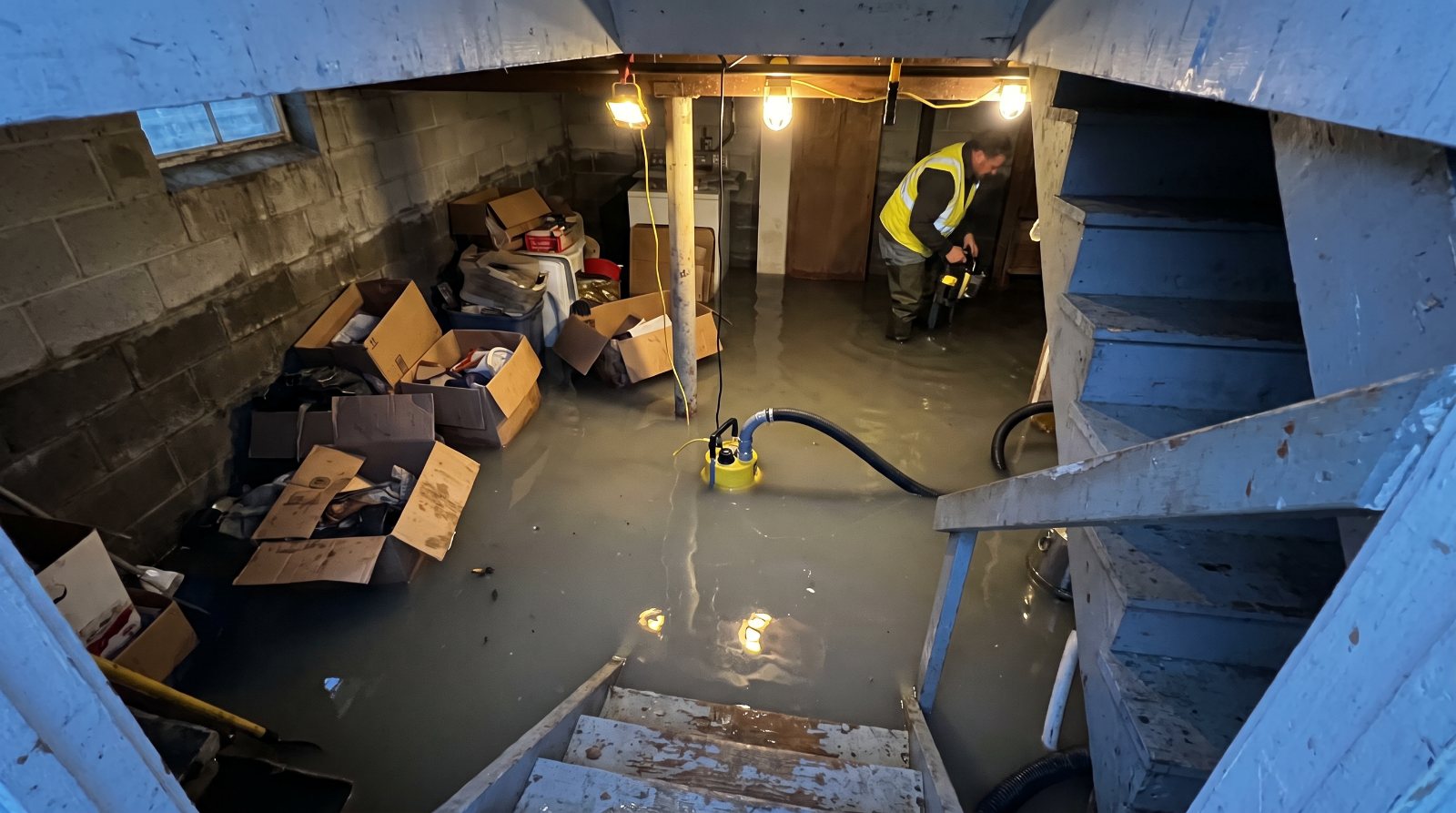
Seasonal cottages on Pennsylvania's largest natural lake
Conneaut Lake is a different restoration problem from anywhere else we work, and the reason is occupancy. A large share of the housing around the lake is seasonal — cottages, camps, and converted summer places, many of them closed from October to May. A supply line that splits in January is not discovered in January. It is discovered when someone opens the place in spring.
That gap changes the whole job. A loss that ran for weeks or months is no longer a drying project, it is a mold remediation and demolition project, and the moisture has usually reached framing, subfloor, and insulation. The first thing we do on a spring opening call is meter the building rather than guess from what is visible.
Lake-adjacent construction adds to it. Cottages sit low, often on piers, block, or shallow crawlspaces with poor ventilation and no vapor barrier. High lake-driven humidity through the summer keeps those cavities damp even without a loss, which is why mold here often has nothing to do with a burst pipe at all.
Winterization is the single highest-leverage thing an owner can do. A properly drained system, heat maintained at a minimum setpoint, or a monitored low-temperature and leak alarm turns a catastrophic spring opening into a phone call in January.
Conneaut Lake runs about 75 minutes from our Erie staging point. We work the whole lake shoreline and the borough on the same 24/7 rotation.
Shut the water main off if it's a supply leak. Kill power at the breaker to the affected area if water is near outlets — never wade into standing water to reach the panel. Lift what you can. Photograph everything before it's touched.
Conneaut Lake areas we serve
Conneaut Lake Borough · Sadsbury Township · Summit Township · Fairfield Township edge · Route 618 corridor · Route 6 corridor · Water Street · the lake shoreline · Conneaut Lake Park area · Harmonsburg line
All services in Conneaut Lake
Crawford County failures
Spring opening discoveries
A winter freeze break found months later. Mold and demolition, not drying, by the time anyone sees it.
Freeze breaks in closed cottages
Unoccupied, unheated, and unmonitored. The most expensive loss in our service area per dollar of pipe.
Crawlspace humidity mold
Low cottages over damp, unventilated crawlspaces with no vapor barrier.
Storm and wind-driven rain
Older cottage roofs and windows on an exposed shoreline.
Conneaut Lake questions
How fast can you get to Conneaut Lake?
Around 75 minutes from our Erie staging point, covering the borough and the shoreline. Crawford County is a normal part of our service area, not an exception we make.
I opened the cottage and found a burst pipe from months ago. What now?
Do not run fans or a dehumidifier before anyone looks at it, because that moves spores through the building. Photograph what you can see, shut the main off, and call. We meter the structure to find the real extent, then scope containment, removal, and remediation. A months-old loss is almost always larger than the visible damage.
Will insurance cover a freeze loss in a closed-up cottage?
It depends on your policy language, and many carriers require that heat be maintained or the system drained on a vacant or seasonal property. If that condition was not met, a freeze claim can be denied. We document the loss thoroughly and honestly either way — you are better served by a straight answer than a hopeful one.
Can you handle mold in a cottage crawlspace?
Yes. Containment, HEPA filtration, removal of affected porous material, antimicrobial treatment, and then the part most people skip: fixing the moisture source with a vapor barrier and ventilation, so it does not return next summer. Mold assessments are $250, credited back if you hire us for the remediation.