Western county, creek corridors, farm parcels
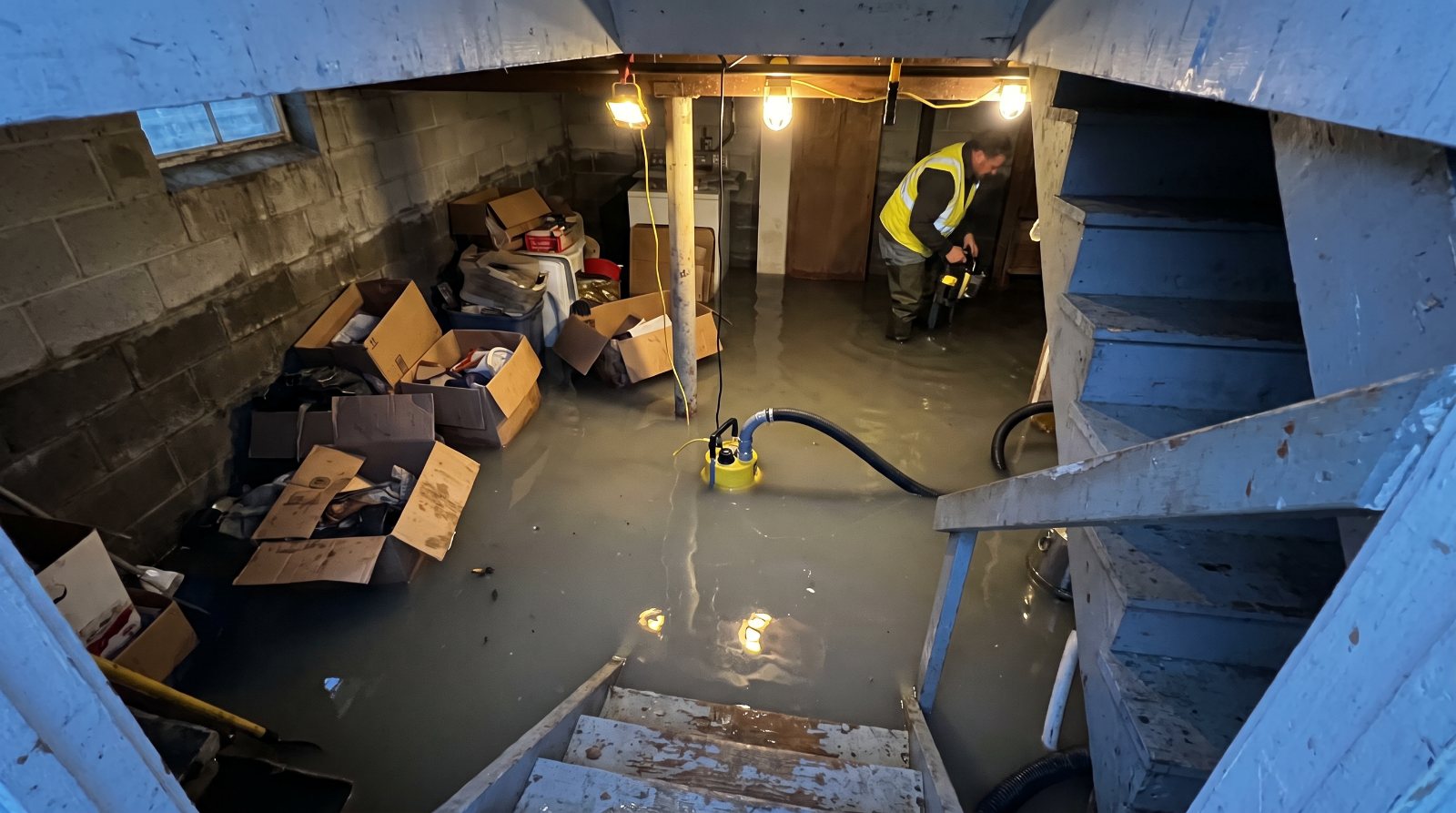
Albion sits in the western corner of Erie County, and the losses here are shaped by two things: creek corridors and agricultural land. Conneaut Creek and its tributaries run through this area, and properties in those corridors take genuine surface water in heavy spring rain — which is a coverage problem as much as a restoration one, since surface flooding is excluded from a standard homeowners policy without a flood endorsement.
Surface water is also not clean water. It carries soil, agricultural runoff, and whatever it passed through on the way in, so it is treated as contaminated: porous materials that it touched come out rather than being dried in place. Homeowners are frequently surprised by that, and it is better heard before the work starts than during it.
The rest of the pattern is familiar for the rural county — older frame housing on block foundations, long uninsulated supply runs that split in a hard freeze, private well and septic systems where a wastewater failure and a water loss are the same event, and outbuildings where a leak can run for days before anyone walks in.
Albion and the western townships run about 70 minutes from our Erie staging point.
Shut the water main off if it's a supply leak. Kill power at the breaker to the affected area if water is near outlets — never wade into standing water to reach the panel. Lift what you can. Photograph everything before it's touched.
Albion areas we serve
Albion Borough · Conneaut Township · Elk Creek Township · Cranesville · Springfield Township edge · Route 18 corridor · Route 6N corridor · Main Street · State Street · Conneaut Creek corridor
All services in Albion
Western county failures
Creek surface water
Conneaut Creek corridor properties taking genuine flooding. Excluded without a flood policy, and treated as contaminated water.
Frozen supply lines
Uninsulated runs in older frame houses. Inland freezes here are colder than the lakeshore.
Septic system failures
Private systems backing into basements as Category 3 losses.
Farm outbuilding leaks
Barns, shops and unoccupied structures where failures run unnoticed.
Albion questions
How fast can you get to Albion?
Around 70 minutes, covering the borough, Cranesville and the western townships. You will get a real ETA on the call.
The creek flooded my basement. Will insurance pay?
Generally not under a standard homeowners policy — surface water and groundwater are standard exclusions, and a separate flood policy covers them. We document it thoroughly regardless and will tell you what we think before you file rather than after.
Is creek water treated as clean water?
No. It carries soil, agricultural runoff and bacteria, so it is handled as contaminated. Carpet, pad, drywall and insulation it reached come out rather than being dried in place, and the area is decontaminated before rebuilding.
Can anything stop it recurring on a creek lot?
Grading and drainage away from the foundation, a correctly sized sump with battery backup, and sealing entry points all help. On some creek-corridor lots it is not fully solvable, and we will say so rather than sell you a solution that will not hold.