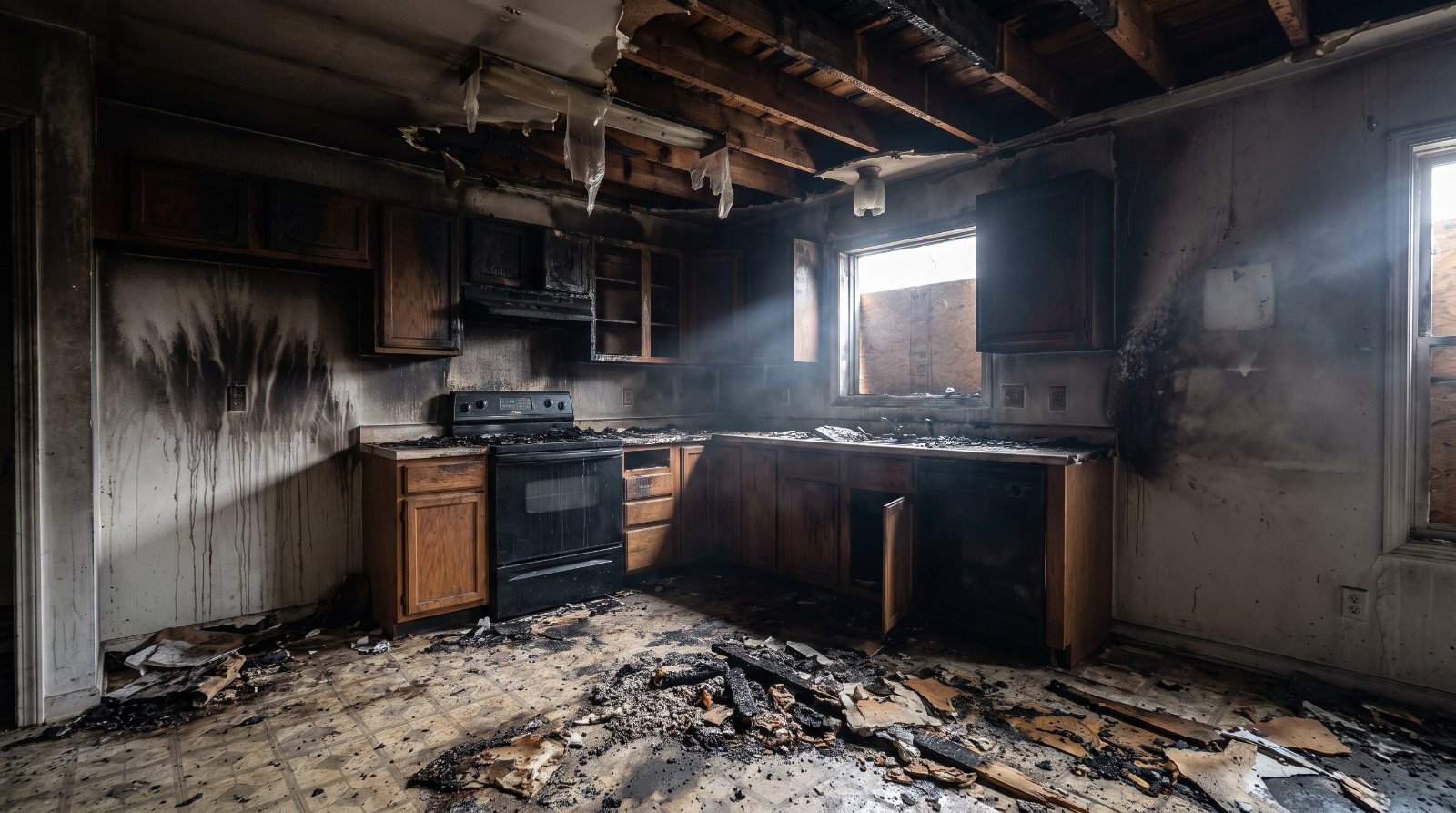
What a fire actually leaves behind
Millcreek is largely postwar and later suburban housing, which changes the fire profile. Open floor plans and lightweight engineered framing mean fire and smoke move fast and the structure loses strength faster than old-growth lumber does.
Most of our Millcreek fire calls start in a kitchen, a dryer, or an attached garage. Attached garages are the worst case, because the fire is often well established before anyone inside notices, and the smoke enters the house through the connecting door and shared attic.
Modern homes are also full of synthetics. Burning plastics produce an acidic soot that etches glass, pits metal fixtures, and corrodes electronics within days. Speed matters more here than in an older house, not less.
Do not wipe soot, do not run the HVAC, and do not plug in anything that was exposed to smoke or heat. Photograph everything before it is touched, and do not enter until the fire department releases the structure.
All services in Millcreek
Working with your carrier
We document the loss, provide a written scope, and deal with your adjuster directly. You choose who does the work — that decision is yours, not your insurance company's.
How claims work →The sequence after a fire
Board-up and tarping
An open structure keeps taking weather. Windows, doors and roof secured before anything else starts.
Smoke mapping
Where the smoke actually travelled, which is rarely only where the fire was. HVAC, wall cavities and upper floors.
Soot and odor removal
Surface-appropriate cleaning, duct cleaning, contents processing, and odor treatment at the source rather than over it.
Repair and rebuild
Drywall, trim, flooring and paint, coordinated with your adjuster so the claim and the work stay aligned.
Millcreek fire questions
How fast can you get to a fire in Millcreek?
About 40 minutes for board-up and emergency stabilization, 24 hours a day.
My garage burned. Is the house affected?
Almost always. Attached garages share an attic and a wall with the living space, and smoke follows those paths. We check the attic and the bedrooms above before anyone assumes the house is fine.
What should I not touch after a fire?
Do not wipe soot, do not run the HVAC, and do not plug in appliances that were exposed. Wiping drives soot into surfaces and turns a cleanable loss into a replacement.