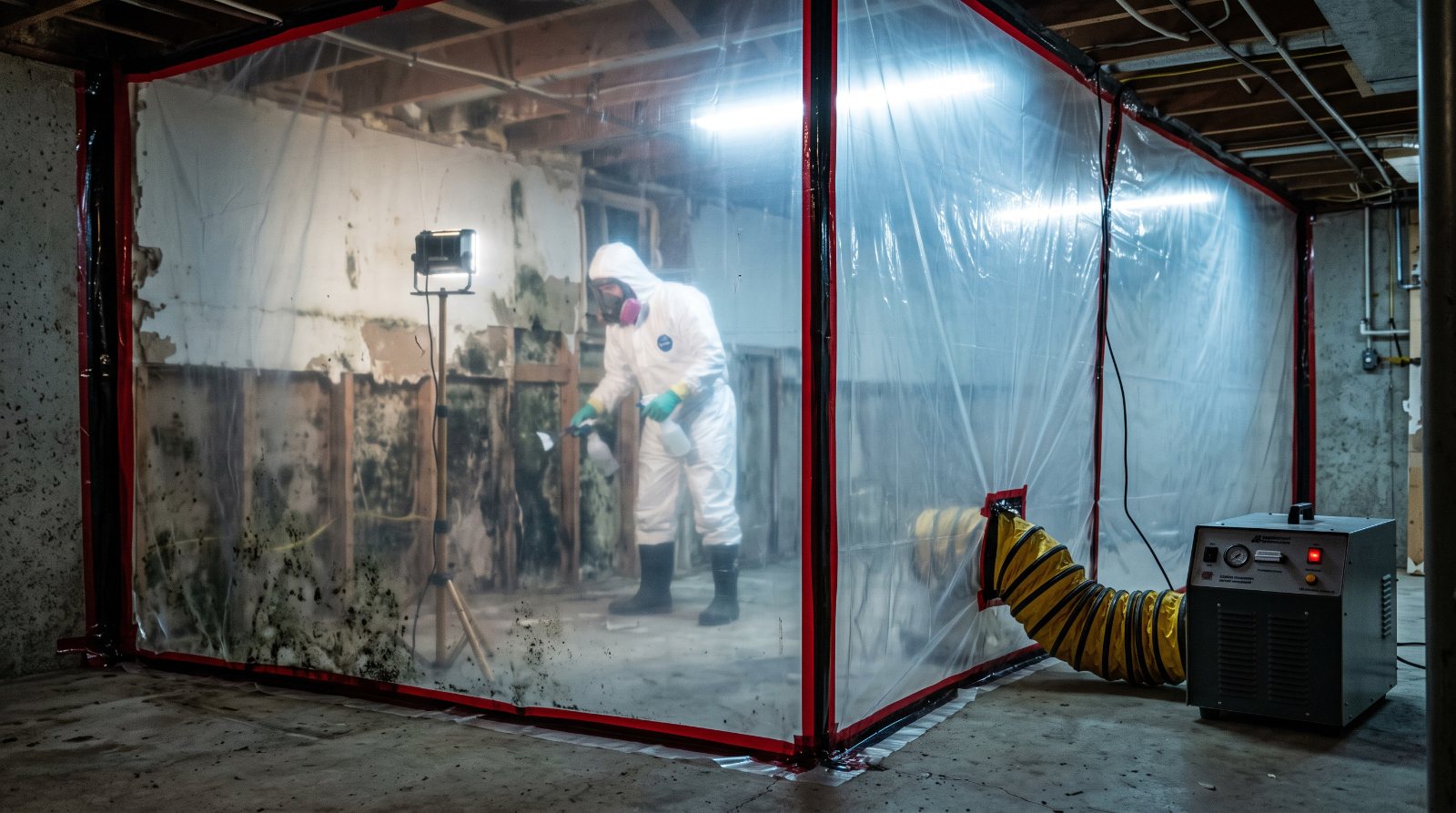
Somebody has already cleaned that basement wall. Possibly twice. The smell came back both times, and it will come back again, because the thing producing it was never the wall.
What you are smelling
That damp-earth, old-book, wet-cardboard odour is microbial volatile organic compounds — gases released by mould as it metabolises whatever it is growing on. Which means the smell is not a nuisance sitting on top of the problem. It is direct evidence of active growth somewhere with a water supply.
It also means odour reliably arrives before anything visible. By the time you can see growth on a joist or the back of a baseboard, it has typically been developing for a year or more. People frequently apologise for calling about "just a smell." That is the right time to call.
Mould needs three things, and you can only remove one
Spores are in every building in Erie County and always will be — you cannot remove them and no honest contractor will claim to. Organic material to eat is your house: wood framing, paper facing on drywall, dust, carpet backing. You are not removing that either.
Moisture is the only one of the three you control. That is the entire reason a remediation that does not correct the water source is a delay rather than a fix. Kill the moisture and the other two ingredients sit there doing nothing.
Ask what is causing the moisture. If the answer is a price for removing the mould without a diagnosis of where the water is coming from, you are buying a few months. It is the most common reason people call us about mould that "keeps coming back" — the previous job treated the symptom.
The four sources we find in this county
Why bleach does not work
Bleach is a surface disinfectant on non-porous material. Wood, drywall and insulation are porous, so the hyphae — the root structure — sit below the surface where bleach cannot reach. What bleach does well is remove the dark staining, which makes the surface look treated while the organism underneath is intact and now has extra water from the bleach solution itself.
Which is why the visible growth returns in the same spot. Removing what cannot be cleaned, then treating and drying what remains, is the actual procedure.
Do you need testing? Usually not.
We turn down more testing work than we sell, and we would rather explain why than have you pay for a report that changes nothing. If growth is visible and the moisture source is traceable, testing does not alter the scope — the remediation procedure is the same regardless of species, because "black mould" is not a species and species identification does not change the method.
What proper remediation looks like
Pennsylvania policies typically cover mould only when it results from a covered sudden loss, and usually with a dollar cap — commonly in the five to ten thousand range. Mould from long-term humidity, seepage, or deferred maintenance is generally excluded outright. That makes the documented cause of the moisture the single most important factor in whether anything is payable, which is another reason the diagnosis matters more than the quote.
One last thing worth saying plainly: do not scrub, sand or pressure-wash visible growth before an assessment. Disturbing it makes it airborne and distributes it through the house, which turns a contained basement problem into a whole-building one. Close the door, keep the area sealed off, and let somebody look at it first.
Smelled it for months?
The inspection is free and includes finding the moisture source, not just quoting the removal.