SHIELD RESTORATION · ERIE, PA6 MIN READIICRC CERTIFIED FIRM #70248702
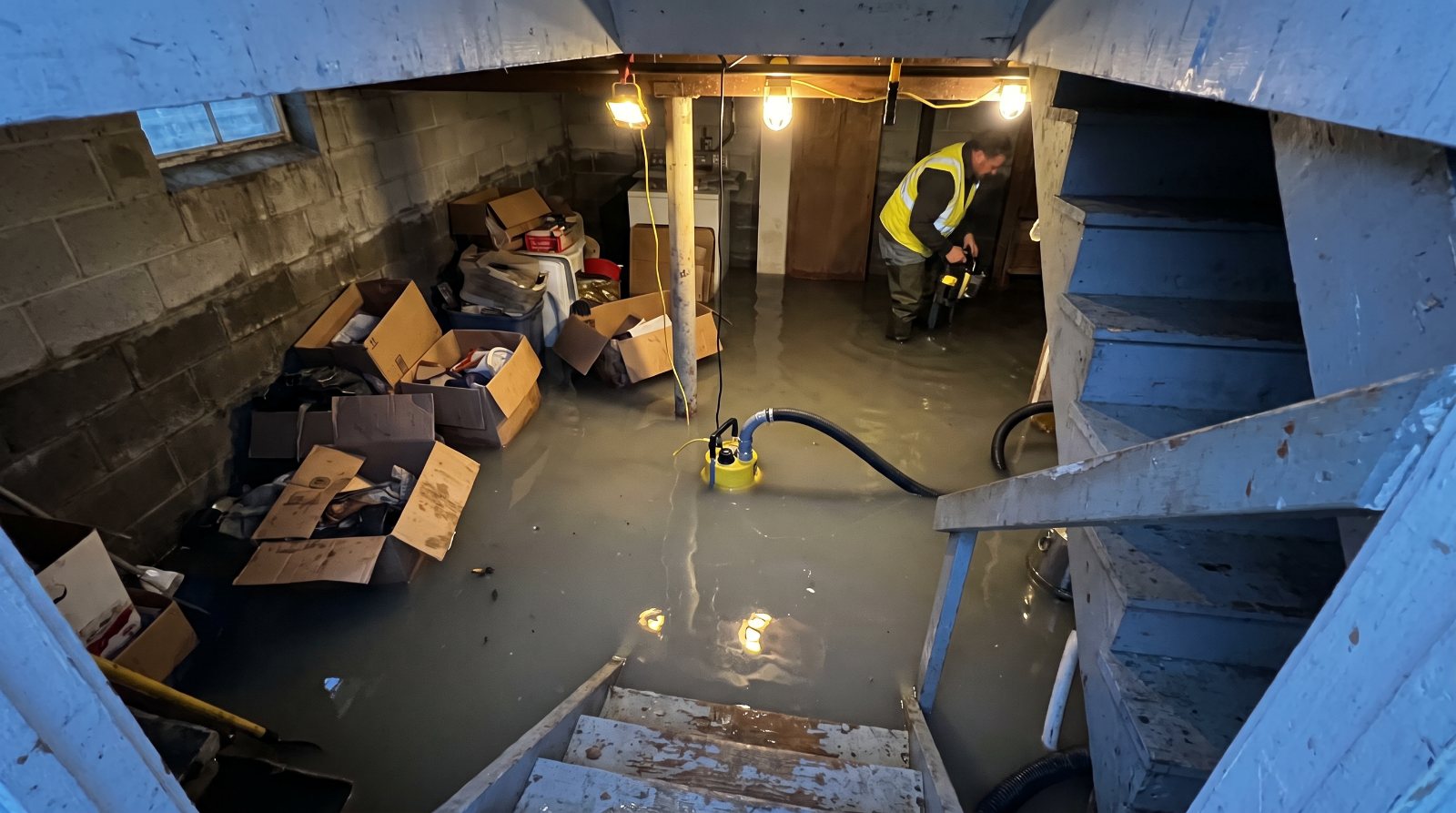
Sump pumps do not fail randomly. They fail during the exact storm that needed them running, which is not coincidence — it is the reason they fail.
The thaw is a stress test
For most of the year an Erie sump pump cycles occasionally and sits idle in between. Then March arrives: three feet of accumulated snow melts over a few warm days, frequently with rain on top of it, into ground that is still frozen a foot down and cannot absorb any of it. All of that water goes sideways and down to the lowest available point, which is your foundation drain and your sump pit.
A pump that has run for thirty seconds a week all winter is suddenly asked to run near-continuously for two or three days. That is when weak components stop being adequate and become failures.
The three ways it happens
01
The motor gives outSump pumps have a service life, commonly seven to ten years, and most of the ones we find in Erie basements are original to the house or the last major renovation. Continuous duty during a thaw is what finishes a tired motor. It is also the failure that gives you no warning at all.
02
The power goes outThe heaviest melt-and-rain events are the same events that bring wind and take down lines. A working pump with no electricity is a decoration. This is the single most common failure we respond to, and it is entirely preventable.
03
The float switch sticksThe pump is fine; the switch that tells it to start is not. Debris in the pit, a switch fouled against the pit wall, or a tether tangled on the discharge pipe. The motor never gets the signal, and the pit overflows around a perfectly functional pump.
A fourth one worth knowing
Frozen or blocked discharge line. If the pipe carrying water away from the house is buried too shallow, discharges into a spot that ponds and freezes, or terminates somewhere that has silted up, the pump runs, pushes water into a blocked pipe, and either recirculates it back into the pit or burns itself out trying.
What a failure actually costs in a finished basement
This is why the pump matters more in Millcreek, Harborcreek and Fairview than it does in an unfinished city basement. A finished lower level is almost entirely porous material — carpet, carpet pad, drywall, baseboard, drop ceiling tiles, and whatever furniture is down there. Every one of those absorbs water and holds it.
Hour 0–2Clean water on a hard surface. Extraction and drying, and much of the material is saveable.
Hour 2–24Pad is saturated, drywall has wicked up several inches, baseboard is swelling. Pad is a loss; drywall may need a flood cut.
Hour 24–48Mold begins. Now the scope includes containment and remediation on top of drying, and more material comes out.
Day 3 and beyondDemolition and rebuild rather than restoration, plus a claim conversation about whether the delay was reasonable.
A pump is a few hundred dollars. A backup pump is a few hundred more. A finished basement rebuild is a different order of number entirely, and that asymmetry is the whole argument.
What to do before next spring
Test it now, not in March. Pour five gallons of water into the pit and watch the full cycle — switch trips, pump runs, water leaves, pump shuts off. If anything hesitates, deal with it before the thaw.
Know how old it is. If it came with the house and the house is more than ten years old, assume it is near end of life.
Fit a battery backup, or a water-powered backup if you are on municipal supply. This covers the power-outage failure, which is the most common one.
Clear the pit. Gravel, silt and construction debris are what foul float switches.
Walk the discharge line. It should carry water well away from the foundation, be buried below frost depth where practical, and not terminate anywhere that ponds and freezes.
Add a high-water alarm. Under fifty dollars, and it tells you the pit is rising before the carpet does.
THE COVERAGE PART PEOPLE MISS
A sump pump failure that floods your basement is generally NOT covered by a standard Pennsylvania homeowners policy. It requires a water backup or sump overflow endorsement, which is usually an inexpensive annual add-on. Most people find out they do not have it on the day they need it. Read your declarations page — that five-minute check is the highest-value thing in this article.
If it has already flooded
01
Do not walk into standing waterIf water is near outlets, the panel, or the furnace, kill power to the lower level at the breaker first — and if you cannot reach the panel without entering the water, do not. Call us and we will handle it.
02
Photograph before you move anythingCause and extent decide the claim. Do this before you carry a single box up the stairs.
03
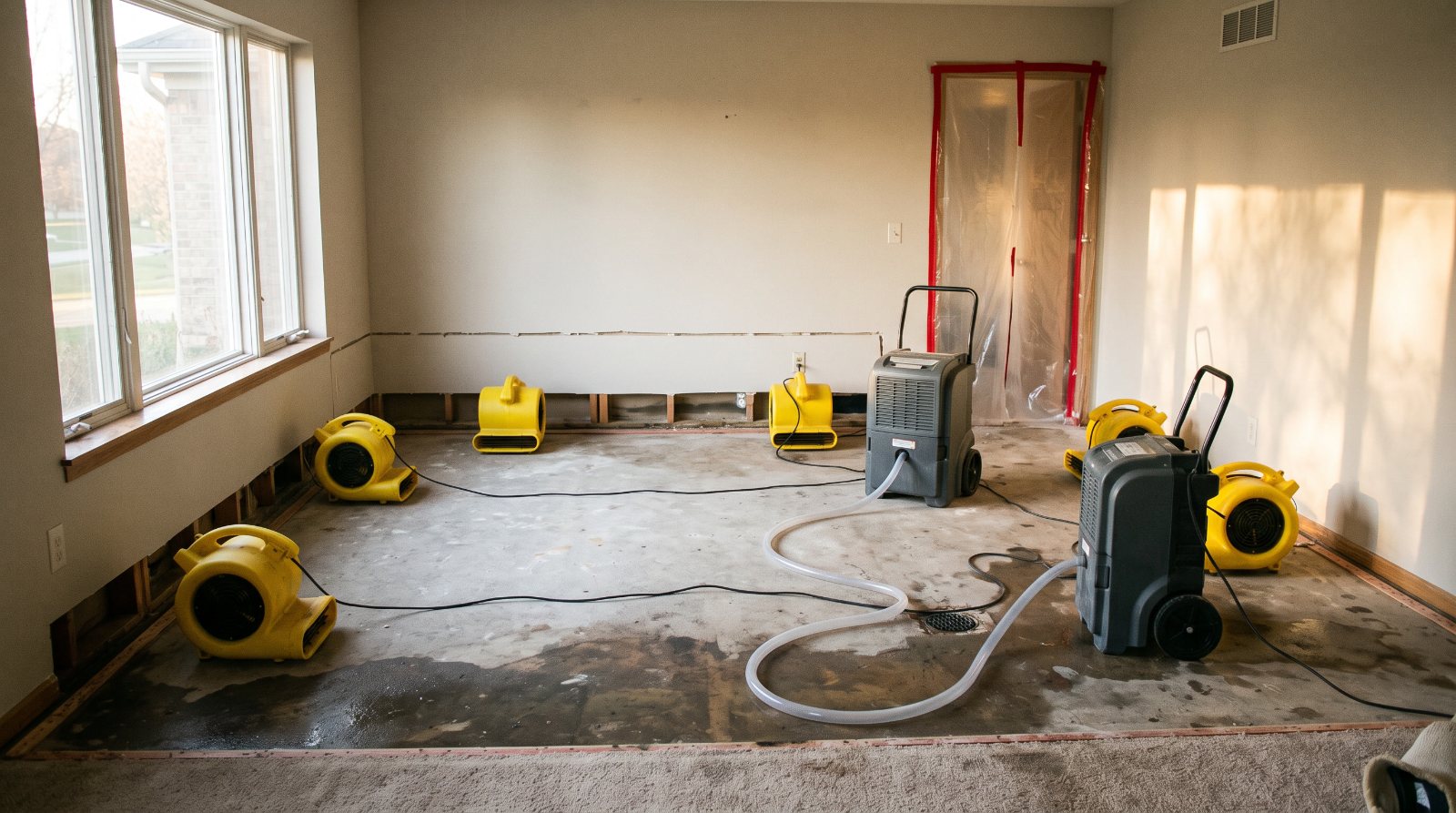
Get the water out fastEvery hour changes what is saveable. A wet-vac helps on a hard surface; a saturated finished basement needs extraction and commercial dehumidification.
04
Do not just run box fans and hopeFans move humidity into the rest of the house without removing it. Without meters you also have no way of knowing whether the structure is actually dry or just dry on the surface.
Air movement plus dehumidification, monitored daily to dry standard — not a set number of days.
Basement taking water right now?
Call before you start moving things. We will tell you what to shut off and give you a real arrival time.