The 20-minute emergency plan every building should have
SHIELD RESTORATION · ERIE, PA6 MIN READIICRC CERTIFIED FIRM #70248702
The gap between a two-day interruption and a two-week one is almost never the construction. It is the four hours nobody could find the shut-off, reach a decision-maker, or authorise the work.
What the delay actually costs
For a business, the repair invoice is usually the smaller number. The real cost is in days closed, staff sent home and still paid, tenants relocated, product and inventory written off, appointments cancelled, and a lease clause about maintaining the premises that you now have to answer for.
Which means the objective of a commercial response is not the same as a residential one. On a house we are trying to save the building materials. On a commercial property we are trying to keep as much of the operation running as possible while we save the building materials — and those two goals need a plan to reconcile.
The four questions that decide the timeline
01
Where is the shut-off?Water main, gas, electrical panels, sprinkler riser and its control valve, roof drains. In a multi-tenant building, which valve serves your space specifically. If the person who finds the water at 6am does not know, everything downstream waits.
02
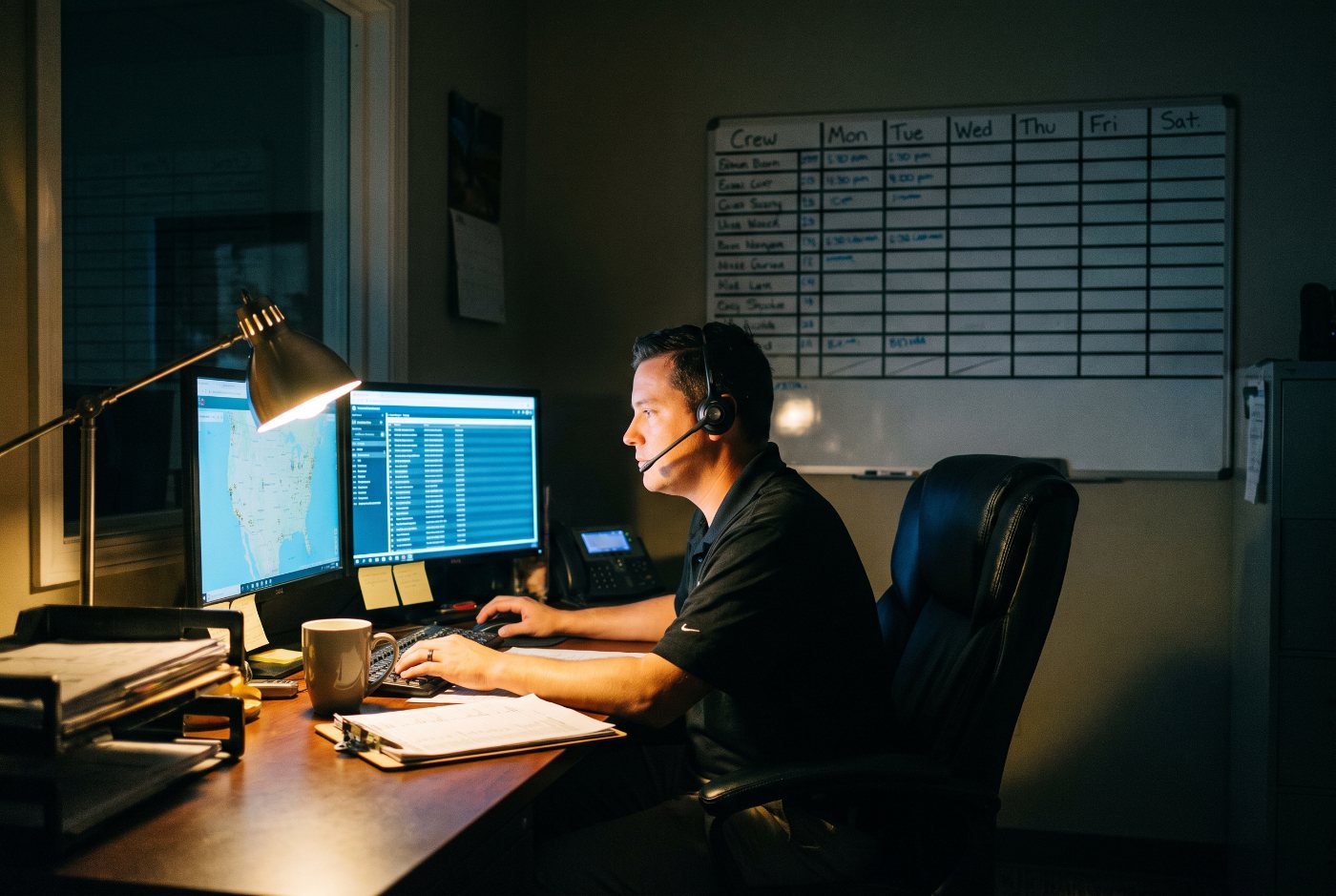
Who can say yes at 2am?Mitigation cannot begin without authorisation from someone with authority to sign. If that is one person and their phone is off, the water keeps moving. A plan names two or three, in order, with mobile numbers.
03
Whose insurance is it?Owner, property manager, or tenant depending on the lease. Establishing that during an emergency wastes hours; establishing it in advance takes one email.
04
What has to keep running?Servers, refrigeration, medical equipment, a production line, a specific set of rooms. If we know before we arrive, we plan containment and power around it instead of discovering it on site.
That is the whole plan
Four answers on one page, taped inside the electrical room door and emailed to whoever is on the call list. It genuinely takes about twenty minutes to assemble and it is the highest-leverage thing a facilities manager can do this quarter.
What we add when we walk it with you
A mapped walkthrough — shut-offs, panels, risers, roof access, sprinkler controls, and the routes equipment can actually get through.
Building-specific risks flagged: a water heater above a server room, a roof drain that ponds, an unheated stairwell with a supply line in it, a sprinkler head somewhere a forklift can reach.
Pre-agreed rates and a signed work authorisation held on file, so mitigation starts on a phone call rather than a negotiation.
Named after-hours contacts on both sides, so nobody is chasing a general voicemail.
Priority response for plan holders. When several calls land in the same storm, plan holders are dispatched first.
A certificate of insurance already issued to your entity, with any additional insured named, so a landlord requirement does not delay mobilisation.
None of that costs anything, and there is no contract attached to it. If you never call us, you still have the page — and honestly, most of its value is in the four answers rather than in who you call.
How we phase commercial work
Almost every commercial client asks the same first question: can we stay open? Usually the answer is partly, and the plan is what makes that possible.
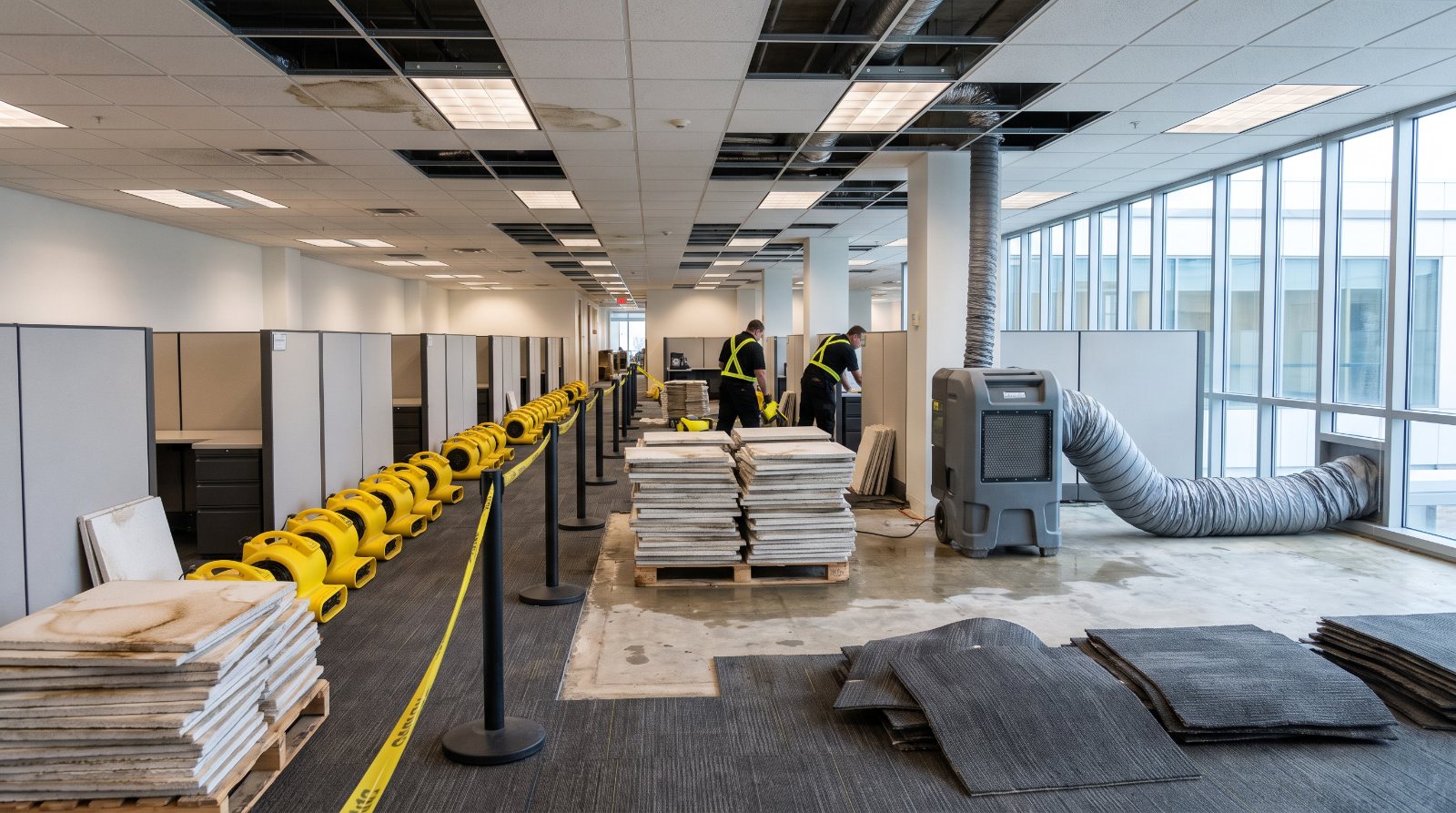
IsolateHard containment and negative air seal the affected area so the rest of the space keeps operating and nothing migrates through it.
PrioritiseThe areas that generate revenue or serve patients come back first. Storage and back-of-house wait.
Work off-hoursExtraction and demolition are loud and disruptive. Drying equipment is not. Noisy phases go overnight.
Sequence the rebuildAround your operating hours rather than ours, in stages so you are not shut for the duration of the whole scope.
Document per unitIn multi-tenant buildings, documentation separated by unit so each claim and any later liability question has its own evidence.
The business interruption piece
If your policy carries business interruption coverage, what supports it is documentation: when the loss occurred, what was affected, what was done and how quickly, and how long the affected space was genuinely unusable. That is a records problem, and it is much easier to solve if the records started in the first hour.
We document from arrival for exactly this reason — photographs, moisture mapping, daily logs, equipment counts and dates. It is also what protects you if a carrier later questions whether the mitigation duration was reasonable.
THE MOST COMMON COMMERCIAL LOSS WE SEE
Not a dramatic event. A supply line or water heater failing on a Friday evening in a building nobody enters until Monday. Sixty hours of water into a suspended ceiling and commercial carpet tile, mould already started, and a claim conversation about why it ran so long. A leak detection sensor with an alert is inexpensive, and in an unoccupied-at-weekends building it is the best money you will spend.
Who this matters most for
Multi-tenant buildings, where one unit failure becomes four units and four tenants.
Restaurants and hospitality, where health department sensitivity and service hours leave no margin.
Healthcare and senior living, where work happens in an occupied facility under infection control protocols.
Schools and churches, where the window to do the work is a break or a weekend.
Any building that sits empty overnight and at weekends — which is most of them.
A live dispatcher and a plan on file is the difference between mobilising and negotiating.
Want us to walk your building?
No charge, no obligation, no contract. You keep the page whether or not you ever call us.