Water does not respect the unit line
A supply line that fails on the third floor is a third-floor problem for about ninety seconds. After that it is a second-floor ceiling, a first-floor wall cavity, and a basement electrical panel. The single most expensive mistake in multi-family restoration is scoping only the unit where the failure happened.
We meter vertically and horizontally from the source on every multi-family call. That means knocking on doors, and it means finding damage in units whose occupants had no idea anything had happened. It is the difference between one claim and four separate claims filed over the following six months.
Tenant communication is part of the job rather than an add-on. Unit-by-unit notices, scheduled access windows, and someone on site who can answer a resident’s question, so your office is not fielding forty calls about when the noisy fans are going away.
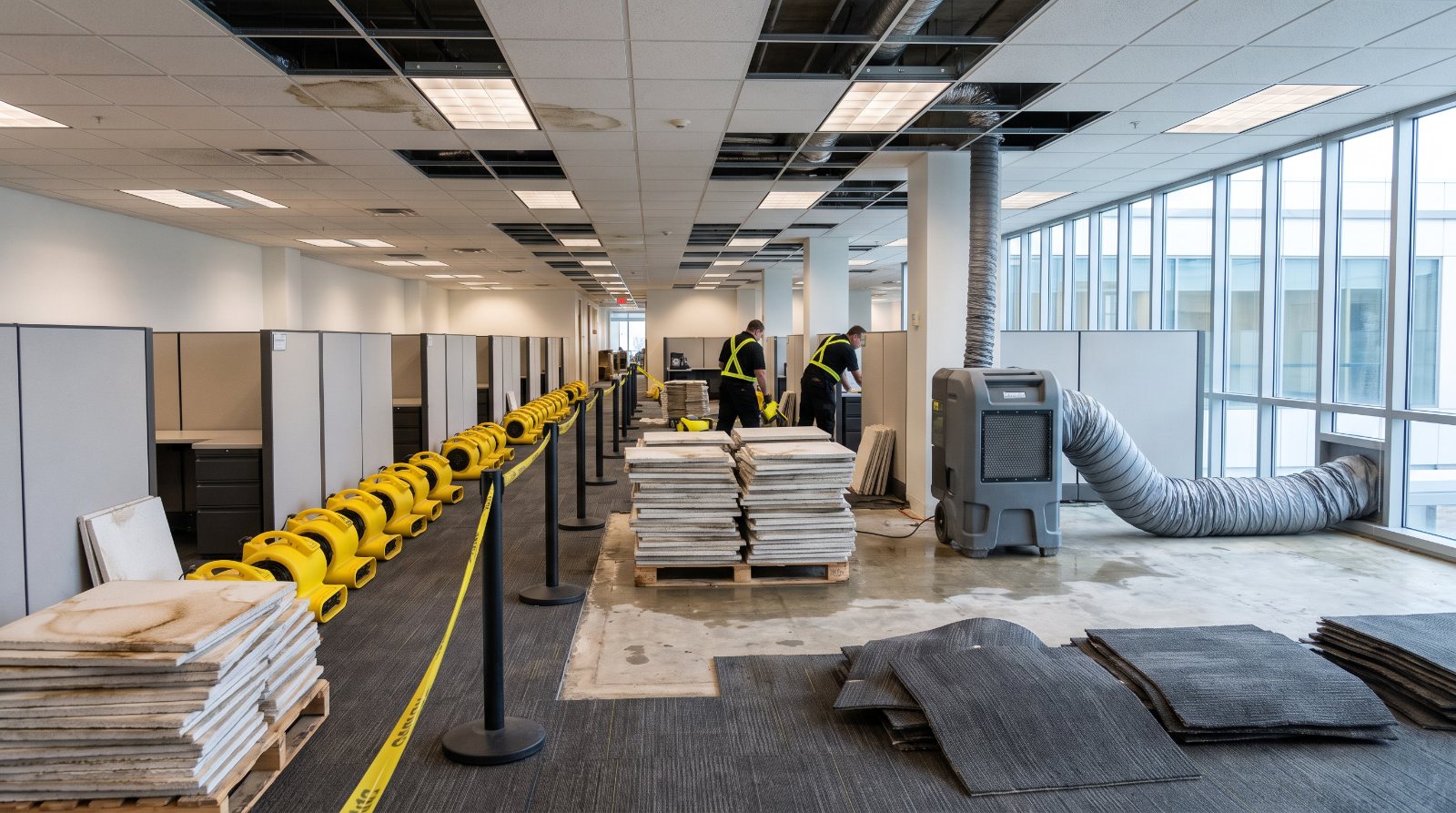
Occupied-building work has its own constraints: equipment that runs at night in a hallway, cords that cannot be a trip hazard, containment that still allows egress, and no unsecured openings in a building where people sleep. We plan for those before the first air mover goes down.
On the coverage side, the building shell is normally the owner’s policy and the residents’ belongings are theirs. We document both so the two do not collide, and so a resident without renters insurance finds that out from their carrier rather than from an argument with you.
Services for this property
Before you need us
We walk your building, map the shut-offs, and put after-hours contacts and pre-agreed rates on paper. When something fails at 2am, nobody is looking for a valve.
Commercial overview →What changes on this kind of property
Find every affected unit
Metering up, down and sideways from the source. Undiscovered units become separate claims months later.
Tenant notices and access
Unit-by-unit notices and scheduled access windows so your office is not the call centre.
Occupied-building drying
Equipment placed for egress and noise, running overnight where the building allows it.
Two records, one loss
Structure documented for the owner’s policy, contents for the residents’, kept separate and complete.
Questions
Do you deal with the tenants directly?
Yes, if you want us to. Notices, access scheduling and on-site questions. Most property managers would rather we handle it, and we would rather the residents hear accurate information from the crew doing the work.
A resident says their belongings are ruined. Whose claim is that?
Theirs, under renters insurance, unless the loss resulted from something the building is liable for. We document their contents alongside the structure so they have what they need to file, and so the two claims stay separate.
Can residents stay in the building during the work?
Usually, on all but the most severely affected units. Where a unit is uninhabitable we say so early, because that triggers the relocation conversation and it is better had on day one than day four.